
 Mochitsuki: 60 Sweet and Savory Mochi Recipes
Red Bean Jelly Recipe
Make an easy and refreshing Japanese red bean jelly dessert at home with this recipe, including options to make it vegan. Read through the blog post for recipe tips and modifications or jump down to the card below.
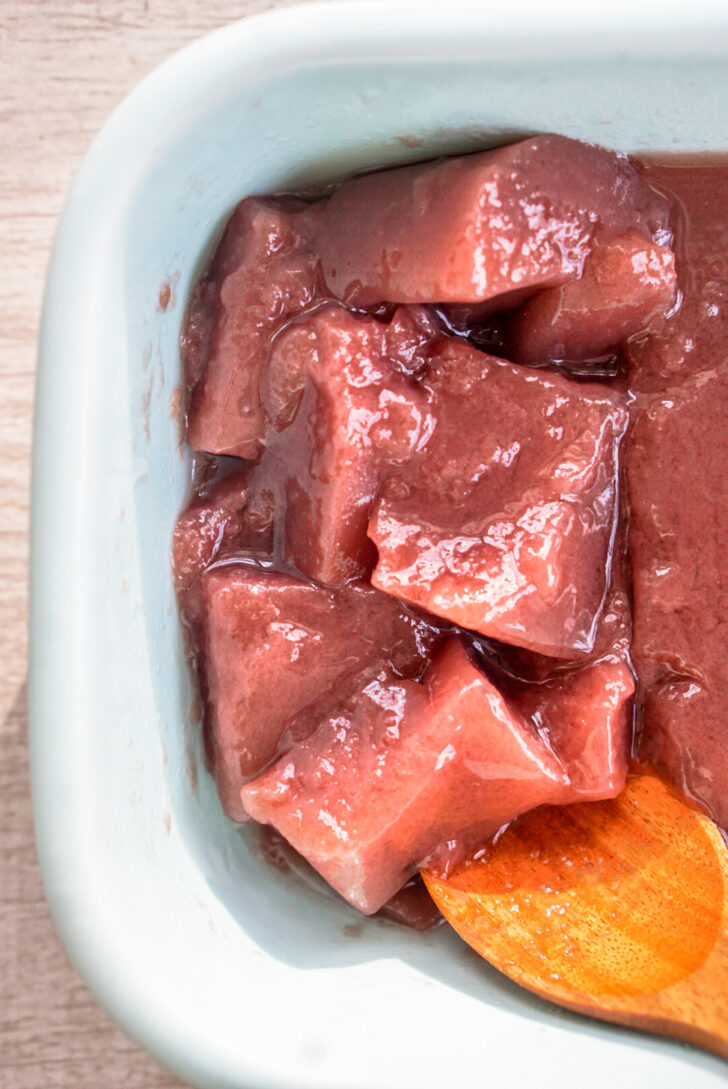
Jellies are a super popular texture in Asian desserts and have been around for a long time. In modern dessert cafes in Japan and throughout Asia you can see all sorts of jellies flavored with different fruits, juices, or teas. I particularly enjoy matcha jelly in my matcha parfaits. Jellies are a great toppings for drinks similar to boba. Or it can be a topping for shave ice, parfaits, and sweet cold soups (like sago). It can also be eaten on its own.
Of course there are all sorts of modern trends in Asian dessert jellies but today I’m kind of bringing it back old school with a red bean jelly.
Japanese Yokan Wagashi
Red bean jellies have actually been around for a very long time and are a staple wagashi. Wagashi are traditional Japanese desserts meant to be eaten with matcha as part of tea ceremonies. Historically, wagashi were made vegan with the exception of a few that include eggs.
Jellies have a long history in wagashi, with prototypes first being made with kudzu starch and steamed. After kanten powder was invented in the 1600s, jellies became more similar to the modern day ones we see now. Kanten powder, also known as agar agar powder, is a gelling agent made from seaweed, similar in use to gelatin powder, but obviously plant-based.
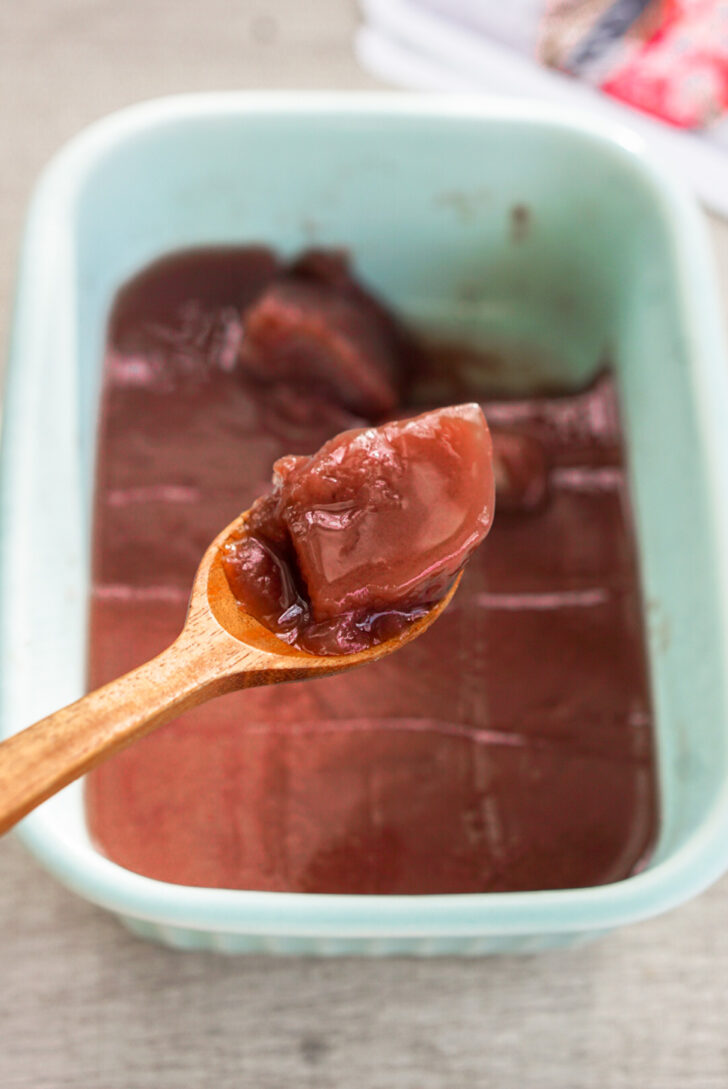
Wagashi that have the form of jellies are generally categorized as “yokan,” of which you can have different types. Truth be told, I’m not a huge expert on yokan wagashi and am not super clear on the differences, as they can seem similar. For example there’s mizu yokan, which uses kanten powder, red bean paste, and water, and there’s neri yokan, which uses… the exact same ingredients. My understanding is that the difference between the two is the amount water added. Mizu yokan has more liquid and neri yokan is more dry. Maybe someone more well versed in tea ceremonies can help me out here.
In any case, my red bean jelly recipe here is more along the lines of mizu yokan with a soft, jiggly texture.
Gelatin vs. Kanten Powder
Modern jelly desserts in Japan frequently use gelatin powder. Japan LOVES the soft jelly texture you get with gelatin. I also prefer gelatin over kanten or agar agar. I find that desserts using kanten tend to come out much more firm and don’t taste as refreshing. However, if you want to make this more in the traditional style of wagashi or if you just have dietary restrictions, you will need to make this vegan by using kanten.
My recipe down below has instructions for gelatin powder, since it’s my preference, but it’s very easy to substitute kanten instead. Use 1/2 tsp of kanten powder in place of the packet of gelatin, which is about 1g. Heat 1/2 cup of water in a pot on the stovetop until boiling. Add the kanten and boil for 2 minutes. Turn off the heat and mix in the red bean paste. Then add the 1/2 cup of ice cold water and mix. Pour into your mold and chill in the refrigerator for about an hour or until set. While gelatin just needs to be put in hot water enough to dissolve, kanten needs to be boiled, so don’t skip that step.
What Red Bean Paste to Use?
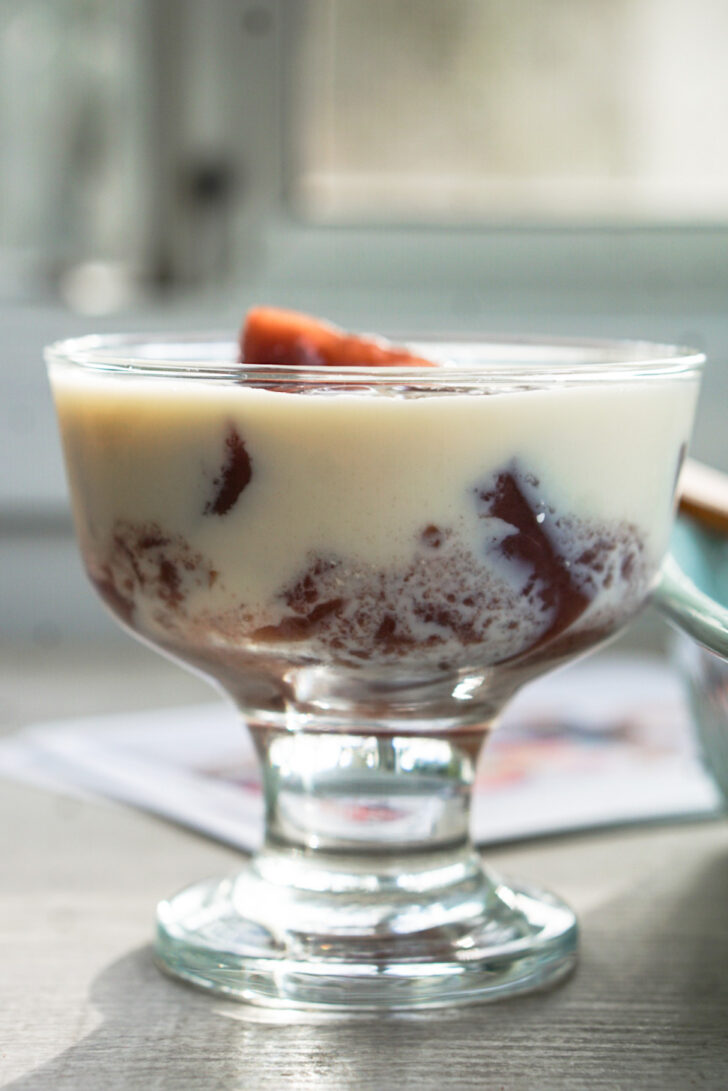
Japanese red bean paste is made with azuki beans, and there are several types of pastes with differ in texture, sort of similar to how you can get creamy or crunchy peanut butter. For a smooth jelly, use koshi an, which is a smooth texture red bean paste. If you don’t mind some partial bean chunks, you can use tsubu an, which has a chunky texture. Another way to add some texture to this dessert is to add chopped chestnuts, which is known as kuri yokan in Japanese. The only risk when doing tsubu an or adding chestnuts is that they may sink to the bottom of the jelly.
This is why I recommend stirring in ice cold water as the last step before chilling. Cooling down your mixture will help the liquid thicken right away. I find that kanten also sets much quicker than gelatin.
What Mold to Use?
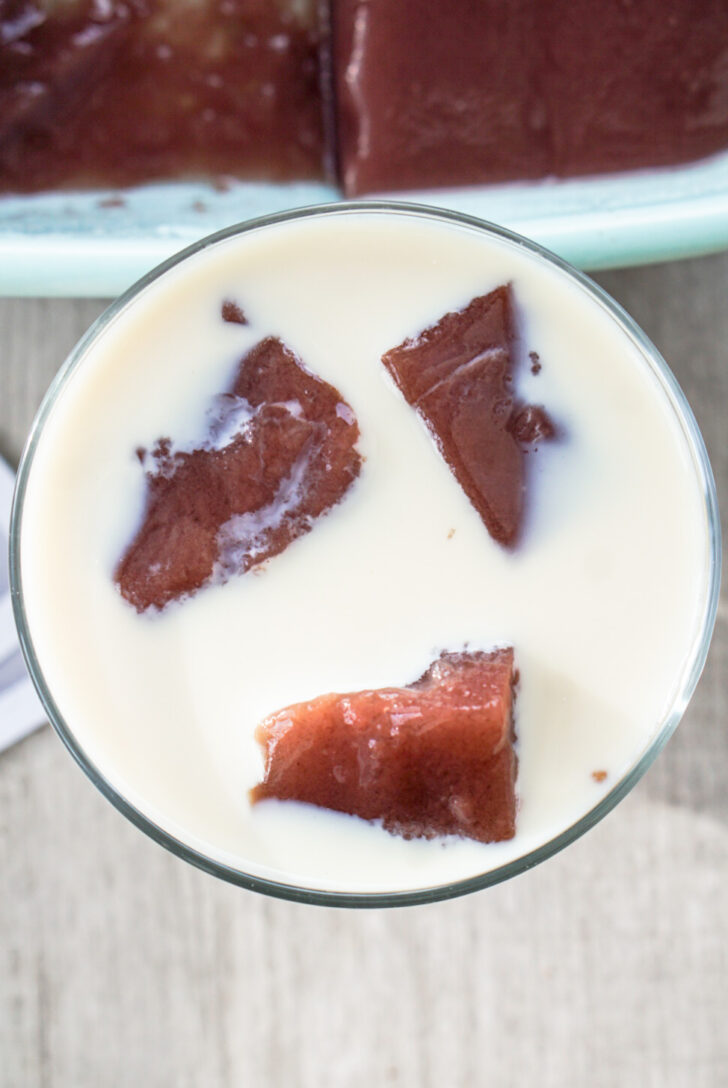
You can really use any kind of container you like, as long as it can hold around 1 1/2 cups of liquid, and it’s something you can easily scoop the jelly out of. I personally like using a rectangular container. I have a ceramic one that’s 7 inches by 5 inches that I bought on Amazon but is no longer being sold. Some people using loaf pans, which is about the right size, but I worry about getting a metal flavor. You can line them with parchment paper if that’s all you have. You can use a silicone mold or plastic tupperware as well. If your container doesn’t come with a lid, just make sure to cover with plastic wrap or some other covering before putting in the fridge.
How to Serve
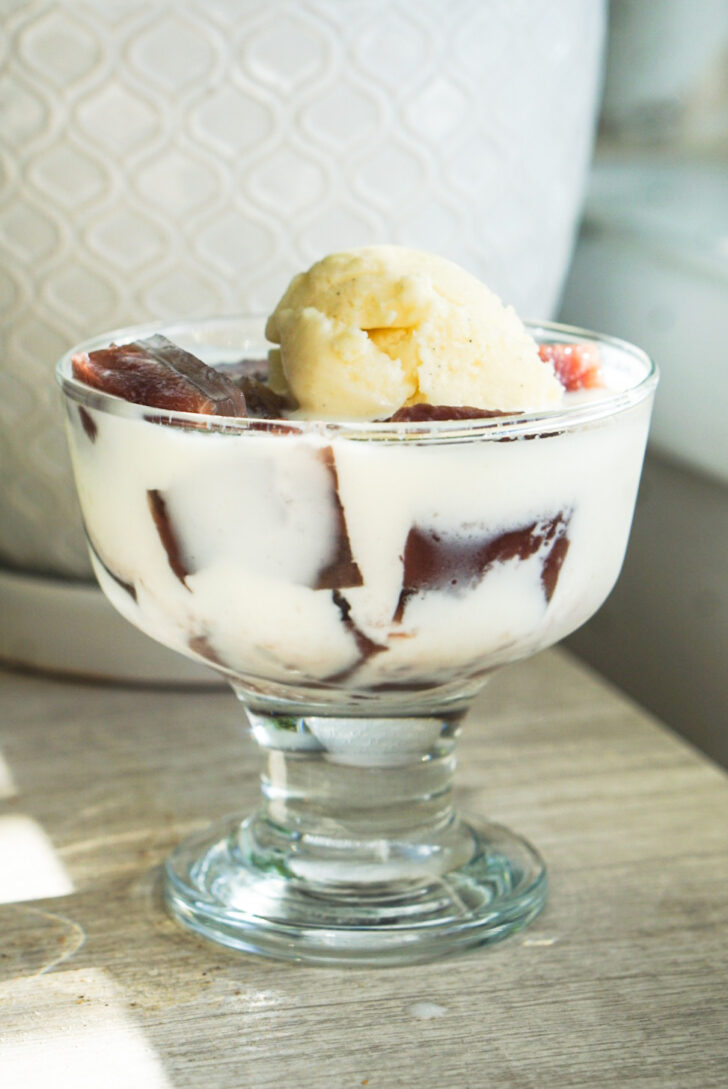
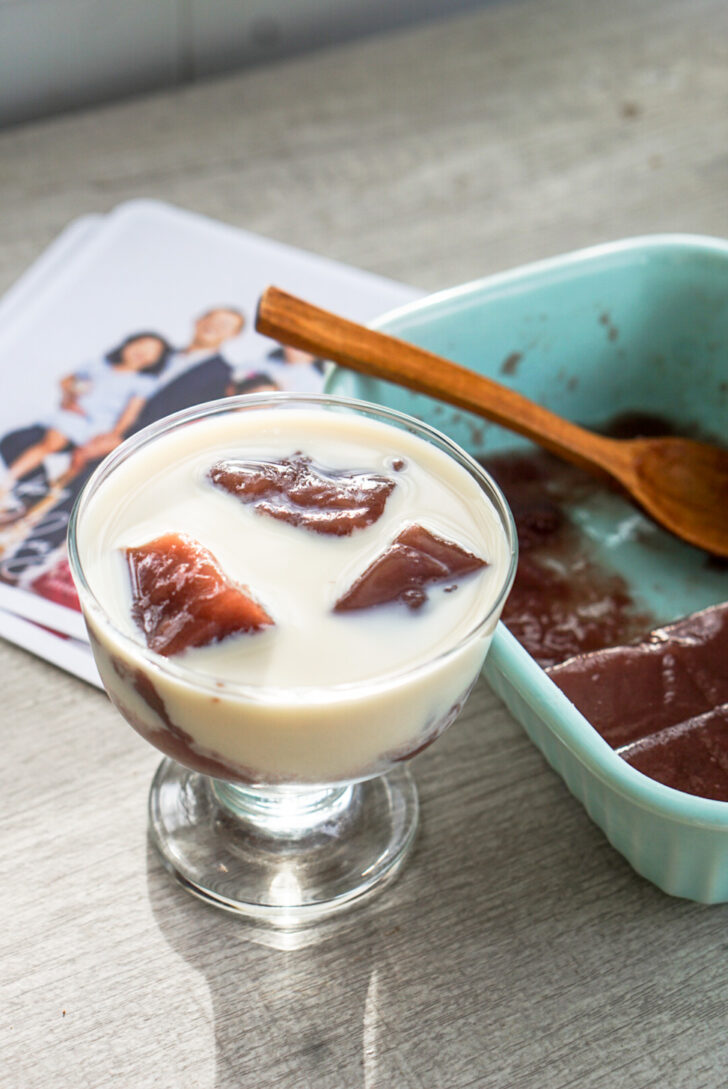
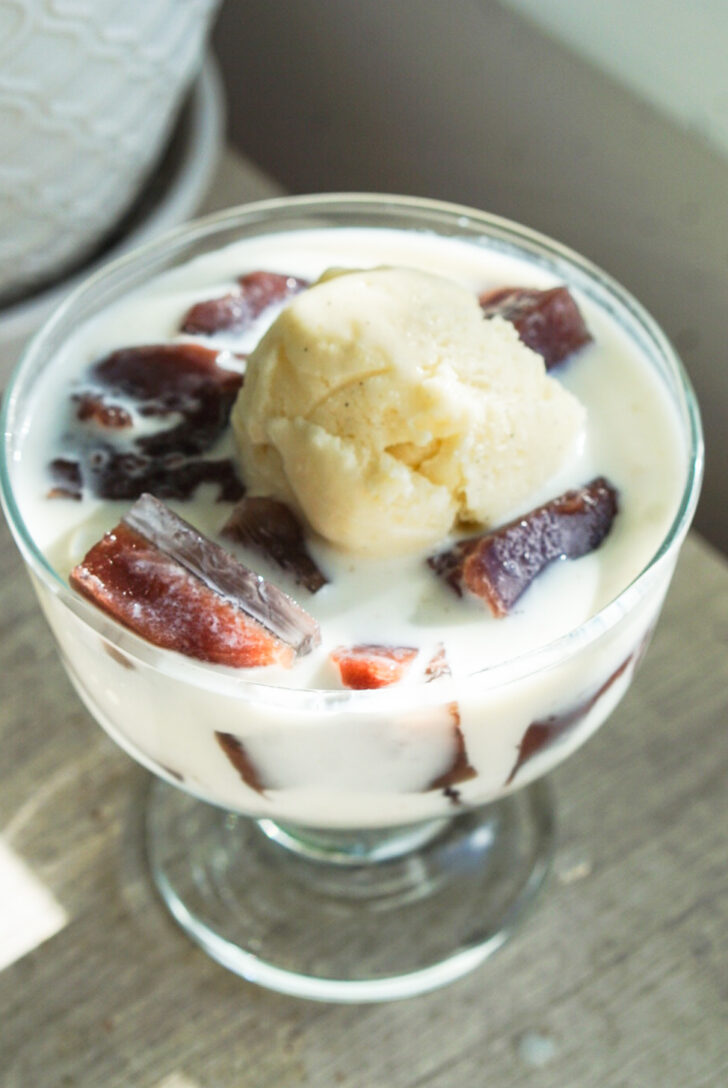
You can eat this jelly on its own or pour some condensed milk or whole milk over it. It’s also fun with a scoop of vanilla ice cream.
If using gelatin, it’ll be soft enough to slurp up through a boba straw so you can add it to drinks.
It also makes a great toppings for shave ice, parfait, sago, halo halo, or any other cold desserts.
I kind of like it just as a snack with some tea.
More Jiggly Japanese Desserts
If you like this recipe, check out these other jiggly desserts:
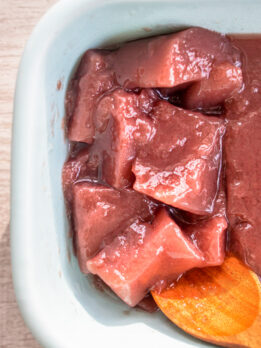
Red Bean Jelly

Ingredients
- 1 packet powdered gelatin, 7g
- 1 cup water, half room temp and half ice cold
- 1/2 cup red bean paste (140g)
Equipment
- rectangular mold that can hold 1 1/2 cups liquid
Instructions
- Mix gelatin with about 2 tbsp of the room temperature water and set aside to bloom.
- Meanwhile, mix red bean paste and remaining room temperature water in a small saucepan over the stove. Heat until the red bean paste is dissolved and the mixture is warm enough to dissolve the gelatin. It does not have to be boiling. Add the bloomed gelatin and stir to combine.
- Let the mixture cool back to room temperature and then add in the 1/2 cup ice cold water. Give it a stir – it should start to thicken right away.
- Pour it into a small rectangular or square container, cover, and let it set in the fridge, about an hour.
- When set, slice into squares and serve as a topping for other desserts or eat on its own with milk or whipped cream.
